Citi business cards explained, who qualifies, what to prepare, cash back vs points, fees vs value, and setup tips for clean bookkeeping and reliable rewards.
If you searched “Citi business credit card,” you’re likely comparing cash-back simplicity with points or airline value, and wondering what it takes to qualify. This guide explains who Citi’s business cards fit, the information you’ll need to apply, how to choose among options, and how to set things up so rewards and reporting work cleanly from day one.
Quick answer
Citi’s small-business lineup typically includes cash-back and travel-oriented options, plus co-branded choices in some markets. Most applicants provide a personal guarantee and basic business details, and many sole proprietors can apply using an SSN. The right pick depends on your top expense categories, travel frequency, and whether any annual fee is justified by perks you will actually use.
Who Citi business cards fit best
Owners who value clean bookkeeping, predictable rewards, and employee card controls are a natural match. Sole proprietors, freelancers, and small LLCs benefit from per-card limits and exports that speed month-end close. Teams that travel can justify premium tiers when lounge or airline benefits replace out-of-pocket costs you already have.
Options at a glance
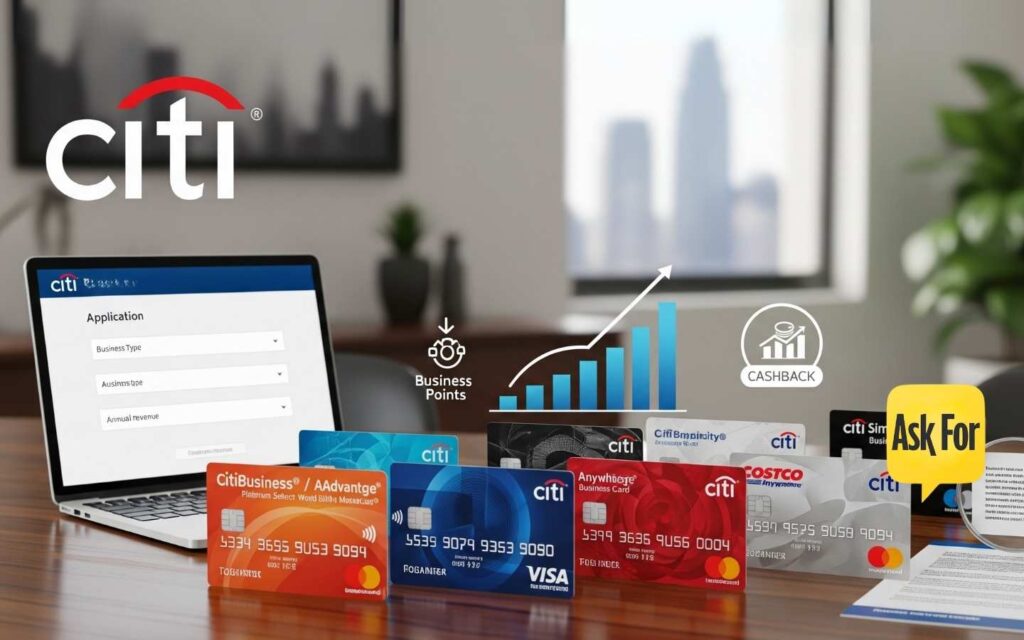
Expect a cash-back style for everyday expenses and a points or airline style for travelers. Cash back keeps things simple when your spend is broad across software, ads, shipping, fuel, and supplies. Points or co-branded options can shine if you routinely redeem flights and can plan redemptions that beat a flat cash-back rate. Product names and terms change, so always verify the current lineup on the issuer’s site before you apply.
Eligibility and what to prepare
You can apply as a sole proprietorship, LLC, corporation, or partnership. Be ready with legal business name or DBA, address, industry description, time in business, estimated annual revenue, and expected monthly spend. You’ll also provide personal information for the guarantor, including SSN and income. Keep business identity consistent across bank records and tax IDs to reduce manual reviews and follow-up requests.
How to choose the right card
Start by mapping your last three months of expenses and annualizing them. If spend is spread evenly, a flat cash-back earn can outperform category bonuses. If you travel often, a points or airline option may return more value when paired with realistic redemptions. Compare annual fee versus net value after year one, not just launch bonuses. Favor cards with the controls and exports your team will use weekly.
Fees versus value
Estimate annual rewards using your real spend and the earn rate you will actually hit. Subtract any annual fee to see a realistic net. Add the value of perks you truly use at full face value, and discount anything that’s aspirational. If the net looks thin, prefer a lower-fee product and upgrade later if your spend grows. Don’t chase a welcome offer you can’t earn responsibly.
Application steps
Apply on the issuer’s official page for the specific card you want. Select your business type and enter business details first, then personal information for the guarantor. Review disclosures, including the credit pull, and submit. Instant decisions happen, but manual review is common. If asked for documentation, respond quickly and explain your business model in one or two clear sentences.
What to do after approval
Turn on autopay for at least the statement balance so interest never erodes rewards. Issue employee cards only to those who need them and set limits by role. Label vendors—ads, software, inventory, travel—so reconciliation is fast. Connect accounting exports or a direct bank feed and schedule a monthly review for statements, receipts, and category tags.
Rewards strategy without the fluff
Pick one primary earn currency and stick with it. Mixing small amounts of cash back and points across many cards dilutes value and adds complexity. If you use points, have a simple redemption plan and book redemptions you would have paid cash for anyway. If you use cash back, set quarterly reminders to redeem and apply funds to real expenses rather than letting value sit unused.
Foreign transactions and travel use
If you buy from overseas vendors or travel for work, check foreign transaction fees. Travel-oriented cards often waive those fees and may include trip protections. If international spend is rare, don’t pay extra for benefits you won’t use; a domestic-focused cash-back card may return more net value on everyday bills.
Controls, protections, and tools
Look for employee card controls, virtual numbers for online vendors, and alerts for unusual charges. Review purchase protection, extended warranty terms, and any travel protections so you know what’s covered and how to file claims. The best tools are the ones you’ll actually use weekly—exports, rules, and alerts that prevent mistakes and fraud.
Credit reporting and personal guarantee
Most small-business cards require a personal guarantee and may report to commercial bureaus. Serious delinquency can still impact your personal credit. Keep utilization modest near the statement close date, pay on time, and request a temporary limit review before large purchases to avoid declines during critical orders.
Using intro APR safely
If your chosen card offers a 0% purchase intro, treat it as a short bridge with a payoff plan, not free money. Divide the planned balance by the promo months and set that amount as autopay from day one. Avoid mixing discretionary spend into that balance because it blurs the payoff target and risks carrying debt past the promo period.
Tips to improve approval odds
Reduce revolving balances on personal cards before applying and avoid multiple new accounts in a short window. Ensure your business address, legal name/DBA, and industry description match across records. If you already bank with the issuer, a healthy relationship can add context but is not a guarantee. Be conservative with revenue estimates and keep details consistent across applications.
Common pitfalls to avoid
Don’t pick a points card if you won’t redeem points well. Don’t count on statement credits you rarely use. Don’t mix personal and business expenses—clean books save hours and reduce audit risk. Don’t ignore refund permissions and card-not-present controls for employee cards. And don’t revolve balances at standard APRs; interest quickly erases rewards.
FAQs
Do I need an EIN to apply? Many sole proprietors can apply with an SSN, though an EIN can help with vendor onboarding and bookkeeping separation.
Are employee cards free? Policies vary by product; confirm limits, fees, and whether premium employee cards carry costs.
Will applying hurt my credit? Expect a hard inquiry and a new account. On-time payments and low utilization can help your profile over time.
Can I upgrade or downgrade later? Product changes may be possible within the issuer’s family; ask support about your specific account.
Do these cards include travel protections? Many travel-tier cards include protections, but coverage varies and exclusions apply; read the benefits guide.
Summary
Citi business credit cards can centralize expenses, deliver steady rewards, and add useful controls for teams—if you choose based on real spending and read the fine print. Decide between cash back and points using your actual categories, run fee-versus-value math with your numbers, and apply with consistent business information. After approval, automate payments, set smart employee limits, connect accounting, and review settings monthly. Used with discipline, a business card is a bookkeeping ally and a modest rewards engine; used casually, it becomes expensive revolving debt. Always verify current terms on the issuer’s site before you apply or rely on a benefit.
General information only; not financial advice.